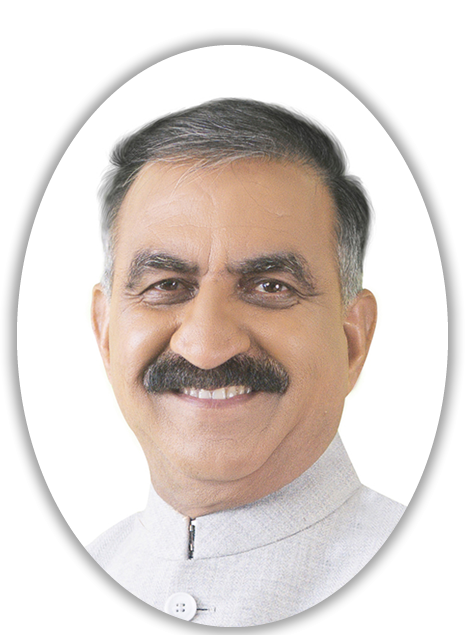
Hon'ble Chief Minister
Thakur Sukhvinder Singh
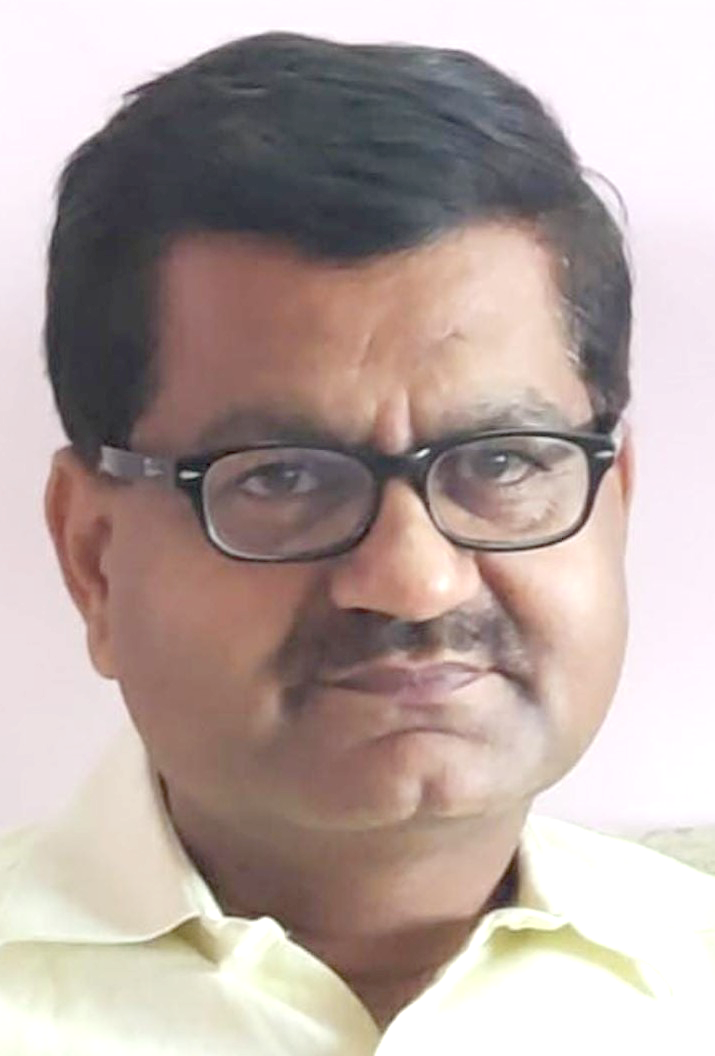
Secretary
Sh. Sushil Kumar Singla, IFS

Secretary
(Environment, Science, Technology & Climate Change),
Government of Himachal Pradesh

Director
Dr. Pushpendra Rana

Director (Environment, Science, Technology & Climate Change), Government of Himachal Pradesh

Overview

Himachal Pradesh’s State Action Plan on Climate Change (SAPCC) aligns with India’s National Action Plan on Climate Change (NAPCC) and the global commitments under the Paris Agreement. Recognizing the state’s unique vulnerabilities to climate impacts such as glacial melt, erratic rainfall, and fragile ecosystems, the SAPCC provides a structured roadmap for climate resilience and low-carbon growth.


The SAPCC Monitoring & Evaluation Framework tracks progress across seven key missions through 53 activities, supported by 178 department-assigned indicators. These are classified across mitigation, adaptation, research, investment, capacity building, and policy actions, enabling data-driven decision-making, cross-departmental coordination, and transparent reporting.

Priority Focus Areas

    7
    Strategic Missions
    53
    Climate Action Activities
    180+
    Monitoring Indicators
    20+
    Departments Involved

    Cumulative Progress Across SAPCC Missions

    This horizontal bar graph presents a snapshot of the cumulative percentage progress made by each of the seven missions under the SAPCC 2.0. Each bar reflects how far the mission has advanced towards its 100% implementation target, allowing for quick cross-comparison of performance across all missions.

    Cumulative Progress Across SAPCC Missions

    Cumulative progress is calculated by considering all indicators for each mission as contributing equally, with no specific weightage assigned to individual indicators.

    SourceIndicator progress data provided by departments.

    Last updated on: 21 May 2026

    Year-wise Mission Progress Trends

    This line graph showcases the annual percentage progress of each mission over time, represented through seven separate trend lines. It offers a temporal view of how each mission has evolved year by year, helping identify growth patterns, accelerations, or slowdowns in implementation.

    Year-wise Mission Progress Trends

    Year-wise progress is calculated by treating all indicators for each mission as contributing equally and aggregating annually, with no specific weightage assigned to individual indicators.

    Source: Indicator progress data provided by departments.

    Last updated on: 21 May 2026

    Himachal Pradesh State Action Plan on Climate Change (HP SAPCC)

    The Himachal Pradesh SAPCC, developed by the Department of Environment, Science & Technology (DEST), was first launched in 2012 and revised in 2020 to align with new national and international climate commitments. HP SAPCC 2.0 reflects state-specific vulnerabilities and priorities, guiding adaptation and mitigation efforts across sectors through seven missions. While not legally binding, it serves as a strategic framework to promote climate-resilient planning and action at the state level.

    View Document
    State Mission for Climate Change Strategic Knowledge and Information

    Achievements

    Himachal Pradesh Knowledge Cell on Climate Change

    • HPKCCC has been set up under Deptt. of Environment, Science & Technology, Govt. of Himachal Pradesh.

    Creation of a State Level Program for Climate Change Education and Awareness

    • Knowledge on Climate Change is being built through various studies, awareness programmes.

    Capacity Building Programme under Climate Change Adaptation in Rural Areas of India (CCA-RAI)

    • Himachal Pradesh is also implementing the Department of Science & Technology (DST), Govt. of India, in bilateral agreement with GIZ on "Climate Change Adaptation in Rural Areas-India (CCA-RAI) project". Under the project, initiatives are being taken for research on climate change and capacity building programmes to strengthen the existing staff of the nodal/line state and districts department, research institutions, NGOs, women SHGs etc.

    Strengthening the Institutional Framework in Himachal Pradesh for Addressing Climate Change

    • The Knowledge Cell on Climate Change has been set up to coordinate, disseminate, develop and implement various Climate Change actions in State with all stakeholder organizations. The policy and plans are being maintained through this cell.

    State Mission for Enhanced Energy Efficiency and Conservation

    Achievements

    Improve Estimates of Potential Savings and Energy Efficiency on a State & Regional Scale by Consumption Sector

    • Implementation of Rooftop SPV plants on residential buildings in accordance with the grid-connecting Rooftop Solar Scheme.
    • 56 Rooftop SPV plants have been installed so far of 1600 KW capacity and potential of 33 GW.
    • 56 beneficiaries from grid-connected system.
    • Off-grid systems include installation of which is a total of around 1 lakh lights from 2011 to July 2018.
    • 56 Rooftop SPV plants have been installed so far of 1600 KW capacity and potential of 33 GW.

    Demonstration Project

    • The project has been finalised for the street lighting at Municipal Council, Dharamshala, under which 244 Nos. of inefficient street lights will be retrofitted.
    • A capacity building scheme through the creation of ECBC cells was developed by BEE with the support from UNDP-GEF project.
    • ECBC Cell has been established in the Directorate of Energy, Shimla, which started functioning w.e.f. 11-04-2017.
    • A high-powered State level ECBC Committee was constituted on 10-10-2017 headed by Chief Secretary and comprising of Secretaries of all concerned Departments i.e. Town planning / HIMUDA / PWD / State Urban Planning Dept. and ULBs. HPEBC 2018 Rules was approved by the Committee.

    Strengthen the National Energy Efficiency Mission

    • Implementation of off-grid and on-grid SPV plants.
    • Demonstration project in rural drinking water pumping systems under Agriculture Demand Side Management (AgDSM) scheme.

    Study the Potential for Renewable Energy Generation

    • Training / workshops / meetings / Awareness campaign to promote the development of non-conventional renewable energies in the State have been organised.
    • Undertaken several Cumulative Environmental Impact Assessment (CEIA) studies.
    • Energy conservation through market-based instruments like PAT.
    • Installation of 2 Biomass power plants.
    • Revival 41 No. improved watermills.

    State Mission for Urban Planning and Sustainable Habitat

    Achievements

    Deen Dayal Antyodaya Yojana – National Urban Livelihood Mission

    • Total 14052 beneficiaries under three components namely Self-Employment Programme (SEP), SMID (Social Mobilization and Institutional Development) and ESTP (Employment through skilled training and placement).
    • Support Urban Street Vendors (SUSV) was initiated in 2016-17 which included survey training; it has benefited 5040 individuals and is still on-going. Shelter for Urban Homeless has also been added to NULM and new constructions are undergoing.

    Pradhan Mantri Awas Yojana – Housing for All (Urban)

    • Mission for urban area will be implemented during 2015-2022 and this Mission will provide central assistance to implementing agencies through States and UTs for providing houses to all eligible families/ beneficiaries by 2022.

    Atal Mission for Rejuvenation and Urban Transformation (AMRUT)

    • Providing basic services (e.g. water supply, sewerage, urban transport) to households and build amenities in cities which will improve the quality of life for all, especially the poor and the disadvantaged is a national priority.
    • An estimate of the funds required over a 20 year period, at 2009-10 prices, was made by the High Powered Expert Committee (HPEC) during 2011.
    • The Committee estimated that Rs. 39.2 lakh crore was required for creation of urban infrastructure, including Rs. 17.3 lakh crore for urban roads and Rs. 8 lakh crores for services, such as water supply, sewerage, solid waste management and storm water drains.
    • Moreover, the requirement for Operation and Maintenance (O&M) was separately estimated to be Rs. 19.9 lakh crore.

    Sewerage Schemes of ULBs

    • There are 54 ULBs (2 Municipal Corporations, 31 Municipal Councils & 21 Nagar Panchayats having population of 6.89 lacs as per 2011 Census) in the State out of which 46 ULBs has so far been covered.

    JNNURM

    • Water supply schemes carried out in 8 ULBs namely – Dharamshala, Rampur, Nagrota, Kangra, Mandi, Kullu, Parwanoo. Urban renewal carried out at Dharamshala and Rewalsar. Sewerage schemes in Baddi and Nalagarh.

    Smart City Mission

    • The mission was started in the year 2015, in two districts – Shimla and Dharamshala; no physical progress has been documented.

    Climate Change Assessment Report (Assessment study for Social & Environment impacts of Eco-Tourism projects Under PPP mode)

    • Trainings are being conducted based on the assessment for FRM chokidars.
    • High level governing body (Chief Minister is the head) is being formed – it is still at its initial phase.

    Swachh Bharat Mission (Urban)

    • Project timeline is 2014-22, with target of 11266 IHHL are to be constructed in the ULBs of State. Overall applications received as on 31.05.2018 were 5093 from which, 3040 verified and 2428 approved and 1584 constructed (equates to 14% progress against overall target).

    Atal Shreshth Shahar Yojna (ASSY)

    • In partial modification to this department notification of even No. dated 28 Oct 2018, the Governor, Himachal Pradesh is pleased to rename the scheme "Shresth Shahar Yojna (SSY)" as "Atal Shresth Shahar Yojna (ASSY)".
    • The Best performing Urban Local Bodies (Municipal Council/Nagar Panchayat) will be felicitated with "Atal Shresth Shahar Puruskar" on 25th December every year on the birth anniversary of Late Sh. Atal Bihari Vajpayee (former Prime Minister of India).

    State Mission on Water

    Achievements

    Updating of hydrological balances

    1. Under Swan River Channelization Project 2884 Ha. land brought under flood protection;
    2. Under Seer Khadd Stabilization 120 Ha. land brought under flood protection;
    3. 584.6 Ha. land has been protected from floods and DPR for Bata river channelization has been prepared.

    Determination of the availability of water in the future for consumption

    • 49976 number of drinking samples were collected and tested through Flood Test Kits.
    • At Gram Panchayat level about 393930 samples were collected and tested through FTK and divisional water testing laboratories.

    Forecasting of hydrological trends (flows) based on climate evolution predictions

    • Hydrology project involving integration and comprehensive hydrological data collection and information system has been initiated.

    State Strategy for Integrated Watershed Resources Management and development

    • Water and Sanitation Support Organization provides information, education and communication on water conservation & water harvesting through IEC materials, bills, pamphlets, radio channels.
    • In last five years WSSO communicated 1919 advertisements and audio messages, conducted Awareness programmes, arrangement of one act play for spreading awareness on water conservation at GP level, Poster/Pamphlet distribution on related topics.

    Enhance rain water harvesting installations coverage

    • 806 structures with capacity of 3443553.1 cum have been constructed under MNREGA, Sustainability Component of NRDWP, NABARD, AIBP and other funds like plan budget, CRF etc.

    Jal Shakti Abhiyan

    • Ministry of Jal Shakti (MoJS) has identified 255 Districts and 1,597 Blocks across the country as water stressed.
    • From the information made available by MoJS, total 756 ULBs have been identified as water stressed.

    State Mission on Health

    Achievements

    Strengthening of the capabilities of individuals to address prevention and care of adverse effects caused by climate change

    • IEC van organized for Information, Education and Awareness Campaigns communicates with localities to give lectures, organize quizzes and webcast of programmes in Shimla, Dharamshala, Kasauli and Hamirpur.
    • Surveillance of vector borne diseases is being done on weekly basis and data is shared with Govt. of India. The State Govt. is carrying out daily surveillance of five diseases namely Scrub typhus, Hepatitis A and E & Dengue.

    Create and develop infrastructural capacities to address the potential threat of yellow fever, dengue fever, malaria and vectors such as mosquitoes

    1. Strategies of National vector Borne Disease Programme are implemented for Vector Surveillance & control.
    2. Capacity Building of Clinicians on new "National Guidelines of Clinical Management of Dengue Fever".

    Apply effective monitoring systems and preparation of emergency plans by including in risk management practices w.r.t. health hazards w.r.t. any climate change related health effects

    • Rashtriya Swasthya Beema Yojana ensures social security and healthcare assurance.
    • The premium cost for enrolled beneficiaries under the scheme is being shared by Government of India and the State Governments.
    • The program has the targeted to cover 70 million households by the end of the Twelfth Five Year Plan (2012-17).
    • Out of total targeted families i.e. 877763, 480588 families are enrolled with 21 private and 155 Public Hospitals empanelled; 116000 smart card holders in last five years receiving.

    State Mission on Sustainable Agriculture

    Achievements

    Systems to manage agro climatic risks

    • 4,36,280 farmers got insured in 2013-17 under Weather Based Crop Insurance Scheme by Department of Horticulture.
    • 185325 farmers covered under Rashtriya Krishi Bima Yojna & Pradhan Mantri Fasal Bima Yojana from Rabi 2012 to Kharif 2016 ensuring area of 97845 ha. 578.5 Crore was insured this period.
    • 3760 poly houses have been set up since 2014 under Dr. Y. S. Parmar Kisan Swarojgar Yojna (RIDF XIX) covering an area of 72 ha. 412696 Sq. m. covered under polyhouses benefitting 554 farmers from MIDH in year 2013-18.

    Foster efficient use of water in agriculture

    • 1819.69 ha. Area covered under Micro Irrigation scheme under National Mission for Micro Irrigation by Department of Horticulture during 2014-17.
    • 231.38 ha. converted to irrigated land under PMKSY in one year.
    • 2554 ha. area covered under Micro-Irrigation under Rajiv Gandhi Micro-Irrigation Scheme funded by NABARD under RIDF-XIV during 2015-2018.

    Reduce use of chemicals / Fertilizers

    • Micronutrients promotion was carried out in 2014-15 on 700 Ha. of land.

    Increase the State's irrigated surface area

    • 377 Ha. area was developed under RAD of National Mission for Sustainable Agriculture from 2014-18;
    • Integrated Water Harvesting System under NMSA covered 4579.5 Ha.;
    • Under Value Addition and Resource Conservation Greenhouse were 23668 sq m, WHS in command area of 51.7 Ha.;
    • 248.3320 Ha. area was brought under irrigation under Per Drop More Crop component of Pradhan Mantri Krishi Vikas Yojana by constructing water harvesting / water conservation structures in rural areas.

    Expand irrigation and water policies

    • Various schemes for building Borewells and Lift Irrigation schemes are being implemented in the state.
    • Jal Se Krishi Ko Bal is a scheme being implemented in the state.
    • Solar Power Irrigation Scheme.

    State Mission for Green India

    Achievements

    • 'Himachal Pradesh Forest Ecosystems Climate Proofing Project' being implemented in Chamba & Kangra districts. Under this project, 600 Panchayats would be targeted for forest conservation, increasing biodiversity and generating income from sustainable forest management.
    • Under Catchment Area Treatment (CAT) plan implementation, various activities like plantations, nursery development, soil and moisture conservation measures, infrastructure development and other ancillary activities are being carried out regularly.
    • Water storage structures like ponds, check dams, other civil works, development and conservation of water resources and integrated development of catchments have been implemented. A 20-years old scheme is already being running for checking soil erosion in the forest areas.
    • Mid-Himalayan Watershed Development Project and Himachal Pradesh Forest Ecosystems Management and Livelihood Improvement Project are two major projects supported by World Bank and Japan International Cooperation Agency (JICA) respectively for enhancement of community participation in forest management.
    • Under Mid-Himalayan Watershed Development Project, Himachal Pradesh sold its carbon credits generated from afforestation/reforestation CDM Project for Rs. 1.93 crore to Spain. The verification of the first cycle of the carbon sequestration has been successfully completed in 2014.
    • Within CAT plan implementation new nurseries have been raised in the state.
    • Plantation carried out other than CAT and National Afforestation and Eco Development Board (NAEB) plantations considered under afforestation activities. Urban plantation activity such as "Nagar Van Udyan Yojna – Ek Kadam Hariyali ki Or" Programme for Climate Smart Green Cities also helping in promoting afforestation.

    Cross-cutting: SAPCC Sector-wise Financial Allocation (Reference Table)

    Table 3 : Himachal Pradesh's Sector Wise Estimated Expenditure on SAPCC Implementation

    Sector Proposed Budget in Rs. Crore (2012-16) Allocation in Rs. Crore (2012-16) Estimated Expenditure in Rs. Crore (2012-16)
    Agriculture-Horticulture1,100350.63342.97
    Energy280164.745.78
    Water110480.1484.82
    Health105940.271075.94
    Urban551.15447.56303.5
    Ecotourism650.460.47
    Forest1951263.93295.25
    Strategic Knowledge / Capacity Building4852.532.529
    Total2,8913,650.532,511.53
    View Document

    Missions

    The HP SAPCC 2.0 is structured around 7 key missions addressing climate vulnerabilities across sectors like forestry, agriculture, water, health, energy, urban planning, and knowledge systems. These missions collectively drive state-level adaptation and mitigation through 53 targeted activities aligned with national and global climate goals.

    This mission seeks to enhance research capability in climate science to bridge the existing knowledge gap, and leverage the development of suitable technologies for climate change adaptation and mitigation. By filling this knowledge gap and building well-designed knowledge networks, it aims to help the community and contribute to the INDC. This mission has 5 activities distributed across the following focus areas:

    • Identifying research gap in each sector
    • Development, transfer and adoption of technologies
    • Strengthening institutional framework for addressing climate change
    • Mapping of knowledge base and data resources

    The state has a cumulative installed capacity of grid-interactive renewable power of 793.51 MW and 832.54 MW as of 30-03-2016 and on 30-03-2017, respectively. The state has added 4.92 MW between 2015-16 and 2016-17. Ninety percent of total households in the state are electrified through grid outreach. Climate change can cause long-term changes in the water flow regime of the river basins in the state. Thus, a long-term change in water flow rate across the river basins in HP may have deeper implications on the hydropower projects. The mission has a total of 13 activities and encompasses the following wide range of focus areas:

    • Components impact the tariff of Hydro-Electric Power (HEP)
    • Solar power projects/other reserved energy projects
    • Energy conservation and Demand-Side Management (DSM) measures
    • Energy-use intensities in income-generating activities 
    • Assessment of hydropower development
    • Capacity building of the technical manpower
    • Impact of climate change on glacial deposits
    • Reservoir, silt and dam management
    • Awareness of the rooftop solar programme
    • Safety and quality of hydro projects
    • Maintenance of reserved energy systems

    Climate change has played a significant role in posing a threat to the flora and fauna of Himachal Pradesh. The indicated impacts of climate change in this area include shift of tree species to higher altitudes, change in forest productivity, increase in tree mortality, increased susceptibility of threatened floral species to extinction and increase in heat waves, heavy rainfall events, floods and droughts in the future. State Mission for Green India has derived its mandate from the National Mission for Green India (GIM) that is spelled out in the NAPCC. This mission has a total of 7 action points encompassing following priority areas:

    • Collaboration with hydro power industry for co-management of forest and biodiversity
    • Communication strategies targeted at schools, public and private institutions for planting and regeneration
    • Developing proposals under REDD+ mechanism for additional funding
    • Livelihood enhancement through agro forestry/farm forestry and biodiversity conservation
    • Ecotourism expansion

    Climate change has a profound impact on the health of different communities. Rising temperatures and increased frequency of extreme weather events like heat and cold waves not only results in increased mortality and morbidity but also has an attribution effect like malnutrition and increased instances of diseases. Access to health services is not uniformly distributed across the state. There are 2085 Sub-centres, 576 Primary Health Centres and 90 Community Health Centres. The Health mission of HP SAPCC has 6 action points focusing around the following key areas:

    • Monitoring systems and emergency plans
    • Reduce deaths of new-borns and children under 5 years of age
    • Vector-borne diseases
    • Extreme climate events
    • Operational research for climate change

    Agriculture sector is the prime driver of economic growth in Himachal Pradesh as it provides directly or indirectly employment to 62 per cent of the total workers of the state. This mission has derived its mandate from National Mission on Sustainable Agriculture of NAPCC. This mission consists of 10 action points and encompasses the following wide range of focus areas:

    • Sustainable land use management
    • Promotion and development of resilient high value crops
    • Impact of climate change on crop yield change, demand, and supply
    • People centric watershed development and soil conservation
    • Revision and implementation of contingency plans
    • Use of ICT for dissemination of weather-related information
    • Efficient use of water in agriculture
    • Development of ecovillages/bio villages
    • Crop diversification
    • Balanced use of pesticides and fertilisers

    Himachal Pradesh is the least urbanised state in India with a growth of 1.45 percent in urban population which is recorded to be the lowest from year 2001 to 2011 . Population growth in urban areas results in increased stress on infrastructure which leads to resource congestion, emission and exploitation, which in turn results in imbalance in supply chain. This mission has 7 activities spread across the following priority areas:

    • Improvement of waste management
    • Implementation of rainwater harvesting
    • Recycling and reuse of treated water from sewerage
    • Plantation and maintenance
    • Adoption and manufacturing of hybrid & electric vehicles
    • Tax on diesel run vehicles
    • Blending of biofuel in automobile

    Himachal Pradesh is endowed with a wide range of natural freshwater sources. However, climate change has social and environmental impacts that are likely to exacerbate uncertainty in water supplies and fluctuations in agricultural production. This mission tries to unravel and address some of these vulnerabilities. This mission has 5 action points spread across following diverse issues:

    • Control leaks and implement water-saving programs
    • Integrated water resource management
    • Spring-shed management
    • Contingency plans in water sector
    • Participatory irrigation management

    Activities

    The HP SAPCC 2.0 defines a total of 53 climate action activities spread across its seven missions. These activities are categorized into 27 adaptation, 19 mitigation, and 7 combined adaptation–mitigation actions. Each activity is further classified by its nature—research-based, investment-driven, policy-oriented, or capacity-building—to ensure a comprehensive response to climate risks.

    HP SAPCC 2.0 Missions No. of Activities
    State Mission for Climate Change Strategic Knowledge and Information 5
    State Mission for Enhanced Energy Efficiency and Conservation 13
    State Mission for Green India 7
    State Mission for Health 6
    State Mission on Sustainable Agriculture 10
    State Mission on Urban Planning and Sustainable Habitat 7
    State Mission on Water 5

    Indicators

    The HP SAPCC 2.0 includes a robust set indicators, carefully shortlisted and categorized across missions to monitor adaptation and mitigation progress using existing national and state-level schemes, mapped to thematic areas and scales of implementation.

    Classification by Outcome Levels

    All indicators from the comprehensive list were classified as Output, Intermediate Outcome, or Outcome indicators based on their nature and periodicity (short-term, medium-term, or long-term).

    Thematic Categorization
    • Socio-economic Indicators - Target social and economic vulnerabilities by improving livelihoods and community resilience.
    • Physical Indicators - Focus on structural and non-structural climate measures.
    • Environmental Indicators - Reflect ecological health, covering natural resources.
    Monitoring Scale Mapping
    • Ecological - Based on ecosystem types (e.g., subtropical, species-level, community).
    • Landscape - Defined by spatial units such as river basins or forest beats.
    • Management - Mapped to policy, program, project, or action plan contributions.
    • Jurisdiction - Based on origin of the indicator (state or national schemes).
    • Temporal - Timeframe-based classification into short, medium, or long-term.